
ANDROID 9

Introduction

Android 9 is officially here and we would be remiss not to mention our slight disappointment at the Pie moniker. Don't get us wrong, pie sounds perfectly mouth-watering and playful, but perhaps just a bit too plain for an Android name? Considering the track record so far, that is. Also, not using the π symbol, just seems like a massive missed opportunity.                                                                                                                      Anyway, naming aside, there are some really interesting new features to look forward to in Android 9. That being said, "new" is rather relative here. Google's development process for Android is becoming an increasingly open and feedback-based one. More than anything, however, such a large mass of people is paying close attention to the dev process, nowadays, that few things can truly come as a surprise in a new release.
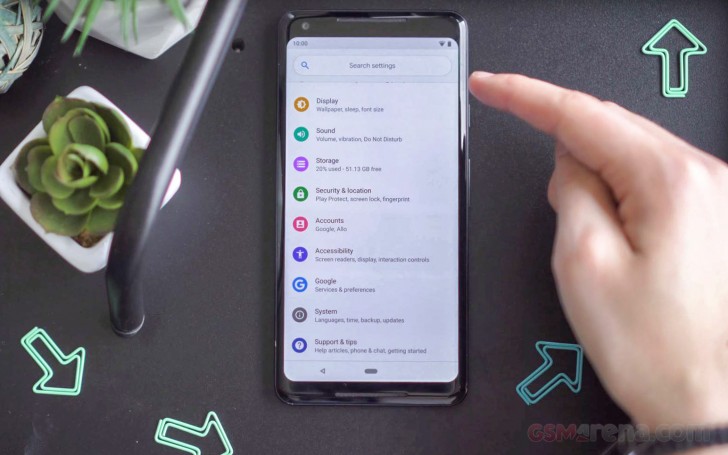
Android 9 Pie review
                                                                                                                                                           Still, now that Android 9 is officially out of the beta channels and making its way into the general public, we wanted to take the opportunity to go through some of the main additions to AOSP in more detail and see just how much they have changed/matured, since our review of the first Android P public beta.
Spoiler alert, If you've been keeping up with the development of Android 9 over the past few months, there's nothing really new or shocking coming up ahead. So, to spice things up further, we also took the liberty of re-running our standard set of benchmarks on a Google Pixel 2 XL unit, running the latest public Pie build. We also wanted to see just how much effect on the battery endurance the OS update has. So, we ran our standard endurance routine on the Pie-infused Pixel 2 XL, as well.

Comments

Popular posts from this blog

realme c2

Realme C2 Brand:   Oppo Category:   Mobiles Processor MediaTek Helio P22 (MT6762) RAM 2 GB, 3 GB, 933 MHz Storage 32 GB Display 6.2 in, IPS, 720 x 1520 pixels, 24 bit Camera 4160 x 3120 pixels, 1920 x 1080 pixels, 30 fps Battery 4230 mAh, Li-Polymer OUR RATING The overall rating is based on review by our editors 7.8 Design 8  / 10 Display 7  / 10 Camera 8  / 10 Features 8  / 10 Connectivity 7  / 10 Usability 8  / 10 Performance 8  / 10 Battery 8  / 10 Realme C2 is worth the wait as it is going to be first ever smartphone to have an MediaTek Helio P22 (MT6762) chipset across the globe. The smartphone is announced in the month of April 2019. 2019 looks like a busy year for Realme as it will announce impressive phones at a competitive prices. Though the phone has hiked the prices later because of rupee falling. Th...

Real Me C12 review

soon there will be a new addition to the Realme C series, the Realme C12 smartphone. The smartphone is expected to launch in November 2020 that would have 3GB oF RAM and 32GB internal storage that could be expanded up to 256GB using a microSD card. Moreover, this dual-SIM mobile might come with a 6.52 inches capacitive touchscreen with a waterdrop notch. The resolution of the screen would be 720 x 1600 pixels and 269 (ppi) pixels density. The Realme C12 phone is speculated to house a 6000 mAh non-removable battery with 10W charging. Besides, the smartphone might be powered by the entry-level MediaTek Helio G35 processor. This would enable you to run various apps without any interruptions. The smartphone will run Android 10 and there will be the Realme UI skin on top....

Pocophone F1

Introduction Xiaomi's announcements have been relatively predictable so far, but the introduction of a new Poco sub-brand was a surprising move. It sounds like a marketing experiment - deliver flagship specs at cutthroat prices. Sound familiar? Well, it does remind of how OnePlus came to be, but we're not sure the new Pocophone F1 is headed in the same direction. Poco is still just a brand, and not a separate company and they stand on the shoulders of Xiaomi's logistics and after sales support network. The feeling of deja-vu aside, OnePlus has proven to mostly stand up to its promises through the years and we're yet to see how Poco will fare. Xiaomi really likes the meaning of  small embedded within its names - Xiaomi or Mi written in Chinese means millet - little rice, while Pocophone in Spanish means little phone. Because they start small and dream big. And it does ring nicely with the Poco launch. Anyway, the Pocophone F1 is not just big promises and polished...