Introduction
It's fall season 2018 and Google is the third big-name company to unveil its flagship phones to the public, after Apple’s pair of XS’ and LG’s V40 ThinQ. We cannot act surprised with Google’s Pixel 3 and Pixel 3 XL but we’re sure excited nonetheless. And we cannot pretend to like them equally either - the Pixel 3 XL, its unsightly notch notwithstanding, is the phone we’re more interested in.
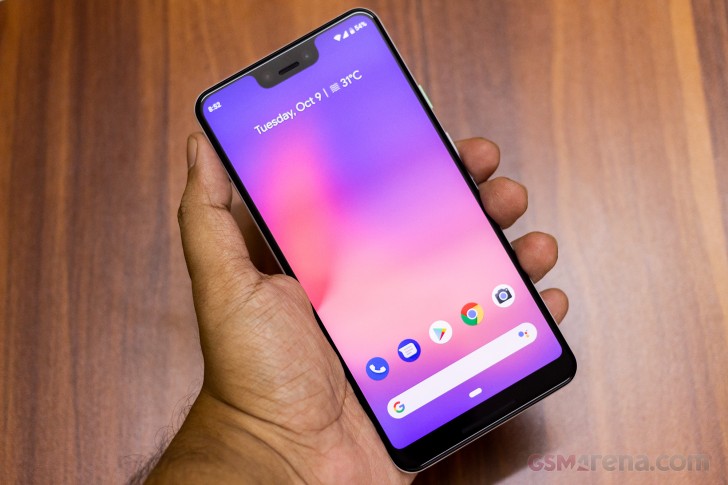 Google Pixel 3 XL
Here’s Google’s larger flagship in pamphlet view.
Google Pixel 3 XL specs
- Body: Glass on the front and back with an aluminum frame in the middle
- Screen:6.3-inch, 18.5:9 2960x1440 AMOLED, 523 PPI
- Rear Camera: 12.2MP, f/1.8, 1/2.55”, 1.4µm, PDAF(dual pixel); 2160p@30 video
- Front Camera: Dual 8MP, f/2.2 wide angle (97-degree) fixed focus, f/1.8 regular angle (75-degree) autofocus
- Chipset: 10nm Qualcomm Snapdragon 845, (4xKryo 385 Gold @2.5GHz + 4x Kryo 385 Silver @ 1.6GHz), Adreno 630; Pixel Visual Core; Titan M security module
- Memory: 4GB RAM, 64/128GB storage, non-expandable
- OS: Android 9.0 Pie
- Battery: 3,430mAh, Power Delivery 2.0 quick charging (18W adapter in the box); Wireless Charging (15W) Qi standard
- Connectivity: 4G, dual-band Wi-Fi 802.11ac, Bluetooth 5.0 aptX HD, GPS/GLONASS, Wi-Fi Direct, NFC, USB 3.1 Type-C
- Misc: Fingerprint sensor (on the back); Stereo speakers
So the Google Pixel 3 XL carries the larger display and larger battery that comes with the larger form factor. But otherwise, the Pixel 3 is every bit as powerful as the XL. It packs the same Snapdragon 845 chipset, the same cameras, the same Android experience, and the same speakers and wireless charging.
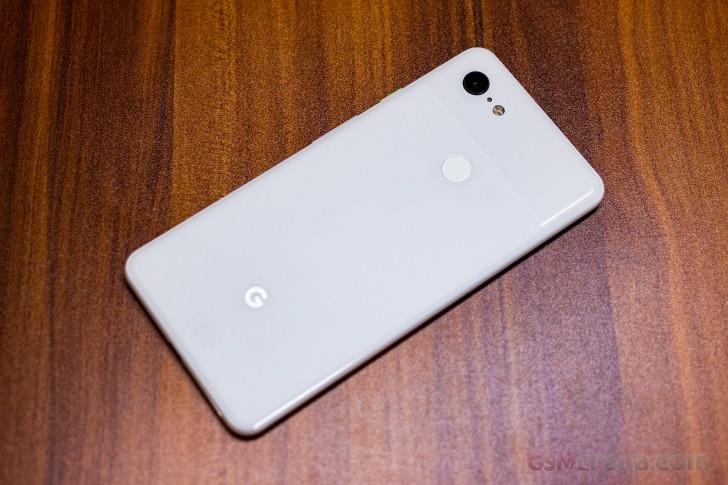 Google Pixel 3 XL
It’s also one of the most capable small phones you can get these days.
Google Pixel 3 specs
- Body: Glass on the front and back with an aluminum frame in the middle
- Screen:5.5-inch, 18:9 2160x1080 AMOLED, 443 PPI
- Rear Camera: 12.2MP, f/1.8, 1/2.55”, 1.4µm, PDAF(dual pixel); 2160p@30 video
- Front Camera: Dual 8MP, f/2.2 wide angle (97-degree) fixed focus, f/1.8 regular angle (75-degree) autofocus
- Chipset: 10nm Qualcomm Snapdragon 845, (4xKryo 385 Gold @2.5GHz + 4x Kryo 385 Silver @ 1.6GHz), Adreno 630; Pixel Visual Core; Titan M security module
- Memory: 4GB RAM, 64/128GB storage, non-expandable
- OS: Android 9.0 Pie
- Battery: 2,915mAh, Power Delivery 2.0 quick charging (18W adapter in the box); Wireless Charging (15W) Qi standard
- Connectivity: 4G, dual-band Wi-Fi 802.11ac, Bluetooth 5.0 aptX HD, GPS/GLONASS, Wi-Fi Direct, NFC, USB 3.1 Type-C
- Misc: Fingerprint sensor (on the back); Stereo speakers
As with previous generations of the Pixel, Google’s latest phones are focused on having the best cameras and offering the best Android experience.
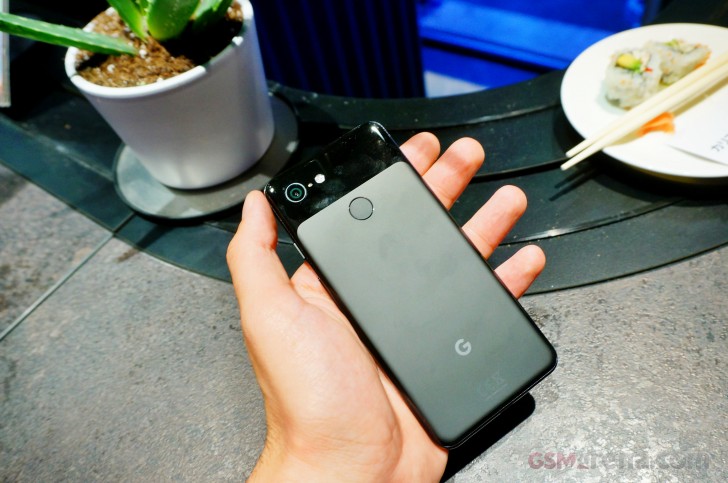 Google Pixel 3
The first agenda will mostly fall to Google’s excellent HDR+ algorithm and perfectly-tuned software as Google has retained the single rear camera of its predecessor. Interestingly Google put a dual camera on the front of the Pixel 3 and 3 XL, which enables wide and regular selfies.
On the software side, the Pixel 3 and Pixel 3 XL are the ubiquitous Android machines - made by Google with promised updates for at least three years. The moment you grab the Pixel 3 smartphones, you have the best and latest of Android in your hands.
Android 9 Pie on the new pair of Pixels runs like a dream and is very gesture focused. Those gestures require some getting used to but are the way going forward.
But this year Google added some niceties to the Pixel 3 and 3 XL to better equip them against 2018 competition, like wireless charging, new Pink paint job a new tall-aspect display for the smaller phone and sadly, a notch for the larger one.So let’s jump in and see about that new hardware.
Comments
Post a Comment